
Staph Infections in Wrestling and Jiu-Jitsu: A Prevention Checklist
Before, during and after practice: the habits that keep you on the mat and off the sidelines.

- Staph spreads through skin-to-skin contact and shared items like towels, mats and gear.¹
- About 1 in 3 people carry staph in their nose, usually with no symptoms.¹
- Most prevention is routine: cover cuts, shower right after training, and wash your gear every session.
- Any red, swollen, warm or painful bump needs a doctor, not a guess.
Why wrestlers and grapplers get staph
Wrestling and jiu-jitsu check every box for how staph spreads. Public-health guidance sums it up as crowding, frequent skin-to-skin contact, broken skin, shared or contaminated items, and gaps in cleanliness.² A single round can involve all five: mat burns and scrapes, a training partner’s sweat, a shared mat, and a gi that sat in a bag overnight.
Most of the time, staph lives on skin or in the nose without causing trouble. The problem starts when it gets into a cut or scrape. That’s why the habits below focus on two things: keeping skin intact and covered, and cutting down how much staph you pick up and carry around.
Before training
- Check your skin. Look for new cuts, scrapes, and anything red or tender.
- Cover every cut or scrape with a clean, dry bandage that will stay put.
- Skip training if you have an open wound you can’t cover, or a spot that looks infected.
- Trim your nails so you don’t scratch your partners (or yourself).
- Bring your own water bottle and towel.
On the mat
- Wear a clean gi or rash guard every single session.
- Keep shoes off the mat, and flip-flops on everywhere else.
- Don’t share towels, razors, or gear.
- Tell your coach if you notice a suspicious spot on yourself or a partner.

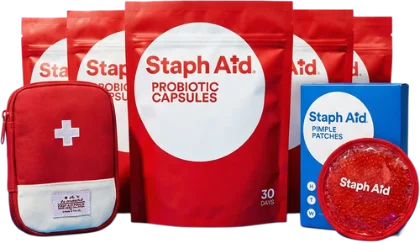
StaphAid is one capsule a day of our proprietary probiotic formula with Vitamin C, formulated to support skin, gut and immune health.* It is not a treatment for any infection.
Learn about StaphAidAfter training
- Shower as soon as you can after class, with soap, before you do anything else.
- Wash your gi and rash guard after every session. Follow the care label, and dry them completely.
- Don’t leave damp gear in your bag. Take it out the moment you get home.
- Wash your belt, knee pads and bag regularly too.
What your gym should be doing
Good academies clean and disinfect the mats every day, using a product registered for the job and following the label’s contact time.² They also have a clear rule for skin issues: if in doubt, sit out until a doctor clears you. If your gym doesn’t do either, it’s fair to ask.
When to see a doctor
See a doctor if you have a bump or patch that is red, swollen, warm, painful, or has pus, especially if it’s getting worse or you have a fever. Don’t try to drain it yourself, and don’t train until you’re cleared. Staph and ringworm can look alike early on, and they need different treatment.
- Centers for Disease Control and Prevention. Staphylococcus aureus basics and MRSA prevention.
- Centers for Disease Control and Prevention. MRSA prevention and control for athletic facilities.
This article is for general education and is not medical advice. If you think you have an infection, see a doctor. These statements have not been evaluated by the Food and Drug Administration. This product is not intended to diagnose, treat, cure, or prevent any disease.