
How to Lower Your Risk of Staph: Everyday Habits That Help
You can’t avoid staph completely, but a handful of simple habits make infections less likely. Here’s what public-health experts recommend, at home, at the gym and during medical care.
- Scrub your hands with soap for at least 20 seconds, or use a sanitizer with at least 60% alcohol.1
- Keep cuts and scrapes clean and covered until they heal, and don’t pick at sores.2
- Keep towels, washcloths, razors and clothing to yourself.2
- Shower after workouts, and wash and fully machine-dry gym clothes and towels after each use.3
Start with your hands
Hands carry staph from place to place all day long, so they’re the best place to start. The CDC’s method is simple: wet your hands, lather with soap, scrub for at least 20 seconds, rinse and dry with a clean towel.1 It takes less than a minute, and it supports every other habit on this list.
If soap and water aren’t handy, a hand sanitizer with at least 60% alcohol works. Choose soap and water when your hands look dirty.1 Sanitizer is a handy backup to keep in the car, a gym bag or a purse. Key times to clean up:
- Before you cook or serve food to others6
- After using the toilet or changing a diaper1
- After touching a cut, a sore or a bandage
- After workouts and after handling dirty laundry
Take care of your skin
Staph usually needs a way in, and broken skin is the easiest door. The CDC recommends keeping cuts and scrapes clean and covered with a bandage until they heal, and not picking at sores.2 Clean a fresh cut with soap and water before you cover it. If a cut turns red, swollen or warm, or starts to drain, call your doctor rather than waiting to see if it clears on its own.2 Shaving can cause small nicks, so use your own razor and skip shaving over cuts or irritated skin.
Some conditions make skin infections more likely, including acne, eczema, diabetes and a weakened immune system.4 If you live with one of these, ask your doctor how to keep your skin healthy and what warning signs to watch for.
Keep personal items personal
Staph passes easily on things that touch skin. Don’t share:3
- Towels and washcloths
- Razors
- Clothing, including sports uniforms
- Bar soap
- Creams or ointments from open jars
This matters most in shared homes and dorms. Give each person their own towel, and a different color can make it easy to tell them apart. On a team, bring your own towel and keep it in your own bag.
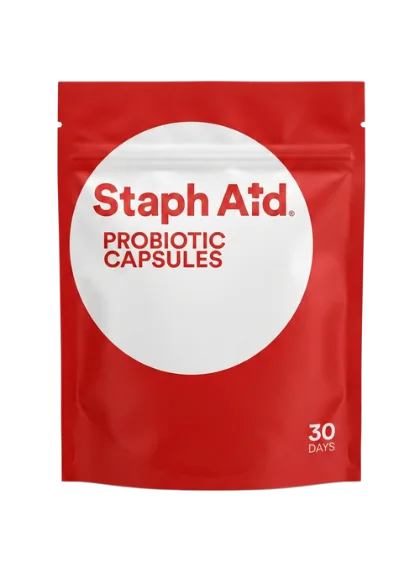
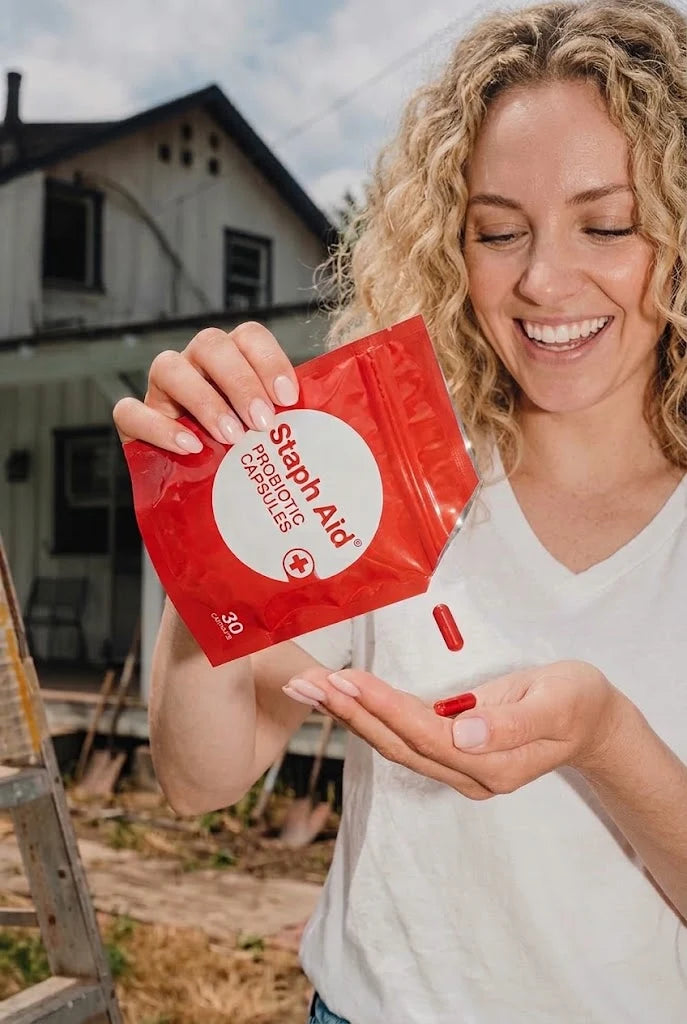
StaphAid is one capsule a day of our proprietary probiotic formula with Vitamin C, formulated to support skin, gut and immune health.* It is not a treatment for any infection.
Learn about StaphAidLaundry and surfaces at home
- Wash towels and workout clothes after each use, and dry them completely in a dryer, not on a line.3
- Clean spots many hands touch, like keyboards, desks and exercise equipment.2
- Wash your hands after handling dirty clothes and towels.3
- Refrigerate perishable food within 2 hours, since staph can also cause food poisoning.6
- If you use a disinfectant, pick an EPA-registered one that lists MRSA on the label and follow its directions.2
Curious how long staph lingers? Read how long staph lives on surfaces, clothes and towels.
At the gym and in sports
Workouts bring together skin contact, sweat, scrapes and shared gear, which is exactly the mix staph likes.
- Shower right after exercise.3
- Put a towel or clothing between your skin and shared benches and machines.3
- Shower before using a whirlpool, therapy pool or swimming pool, and stay out of them while you have an open wound.3
- Cover cuts and turf burns with a clean, dry bandage before practice.3
- Don’t share towels, bar soap or uniforms with teammates.3
During medical care
Hospital stays, surgery and medical devices all raise the risk of infection. The CDC encourages patients to speak up, ask questions, and make sure everyone who cares for them cleans their hands. It also suggests staying away from healthcare facilities as a visitor when you feel sick.5 Clean your own hands, too, before eating and after using the bathroom. Learn more in what patients and visitors should know about staph in hospitals. If you have surgery planned, ask your care team what you can do before and after the procedure to lower your risk of infection.
When to see a doctor
Even with great habits, infections can happen. Don’t squeeze or drain a boil yourself; a doctor can decide on the right care. Call a doctor if you notice:
- A bump that is red, swollen, warm, painful or full of pus
- A boil on your face, or one that lasts longer than two weeks4
- Fever or chills with a skin infection4
- Boils or skin infections that keep coming back4
Get urgent care or call 911 for a fever with fast-spreading redness, confusion, trouble breathing, or a baby who seems very sick.
If you have diabetes or a weakened immune system, call early for any skin infection, even one that looks minor. Pick one or two of these habits to start this week. Small routines, repeated, are what protect a household over time.
- Centers for Disease Control and Prevention. About Handwashing (Clean Hands). https://www.cdc.gov/clean-hands/about/index.html
- Centers for Disease Control and Prevention. Preventing Methicillin-resistant Staphylococcus aureus (MRSA). https://www.cdc.gov/mrsa/prevention/index.html
- Centers for Disease Control and Prevention. Athletes: MRSA Prevention and Control. https://www.cdc.gov/mrsa/prevention/athletes.html
- Mayo Clinic. Boils and carbuncles: Symptoms and causes. https://www.mayoclinic.org/diseases-conditions/boils-and-carbuncles/symptoms-causes/syc-20353770
- Centers for Disease Control and Prevention. 6 Tips for Patients to Avoid Healthcare-Associated Infections. https://www.cdc.gov/patient-safety/stories/6-tips-for-patients-to-avoid-healthcare-associated-infections.html
- Centers for Disease Control and Prevention. Preventing Staph Food Poisoning. https://www.cdc.gov/staph-food-poisoning/prevention/index.html
This article is for general education and is not medical advice. If you think you have an infection, see a doctor. These statements have not been evaluated by the Food and Drug Administration. This product is not intended to diagnose, treat, cure, or prevent any disease.