

Caring for Someone With MRSA at Home
You can care for someone with MRSA at home and help keep the rest of the household safe. Clean hands, covered wounds, careful laundry and a few cleaning habits do most of the work.

- MRSA spreads through contact with the wound or things that touched it, so keep it covered and keep hands clean.1,3
- Wash laundry in warm or hot water and dry it completely on a warm or hot setting.3
- Clean high-touch surfaces with a disinfectant used as the label directs. Fogging the whole house isn’t needed.2
- Call the doctor if redness spreads, the wound drains more, or anyone in the home develops a fever or new bump.1,2
What matters most
MRSA is a type of staph that doesn’t respond to some common antibiotics. It spreads through contact with an infected person, their wound, or things that have touched the infected skin.1 So caring for someone at home comes down to one simple idea: keep the wound’s germs contained, and keep everyone’s hands clean.
You don’t need a hospital-grade setup. Most of what works is a steady routine. It also helps to remember that staph itself is common. About 1 in 3 people carry it without any problem.1 Your goal isn’t a germ-free house. It’s making sure germs from an open wound don’t get a free ride to anyone else.
Start with clean hands
Clean hands are your best tool. Wash with soap and water for at least 20 seconds, or use a hand sanitizer with at least 60% alcohol.5 Use enough sanitizer to cover every surface of your hands.4
Clean your hands:
- Before and after changing a bandage2
- After touching the wound or anything that touched it3
- After handling dirty laundry3
- After taking off gloves3
- Before preparing food and after using the bathroom
The person with MRSA should clean their hands often too, especially right after touching their own sore or bandage.3
Wound and bandage care
Follow the wound care plan from the doctor or nurse exactly.2 In general:
- Keep the infected area covered with a clean, dry bandage until it heals.3
- Have the person wear clothes that cover the bandage when possible.3
- Wear disposable gloves when handling used dressings, and throw them away after one use.3
- Throw used bandages away promptly, in the regular trash.2,3
- Don’t pick at, pop or squeeze the sore.2
Set up a small station for bandage changes: clean supplies, a trash bag, gloves and hand sanitizer, all in one spot. It makes the routine faster and keeps used items from being set down on counters.

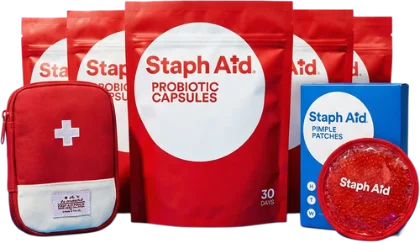
StaphAid is one capsule a day of our proprietary probiotic formula with Vitamin C, formulated to support skin, gut and immune health.* It is not a treatment for any infection.
Learn about StaphAidLaundry without the worry
- Wear disposable gloves when handling laundry soiled with blood, pus or other body fluids, then clean your hands.3
- Wash in warm or hot water, and use bleach if possible.3
- Dry on a warm or hot setting until everything is completely dry.3
- Change sheets and towels at least once a week and clothes every day.3
- Don’t put worn clothes back in drawers before washing them.3
Carry dirty laundry to the machine in a basket or bag rather than in your arms, and wipe down the basket from time to time. Our guide to laundry and staph covers settings and fabrics in more detail.
Cleaning the house
Focus on the surfaces hands touch most, rather than spraying the whole house. The CDC notes there is little evidence that spraying or fogging rooms works better than targeted cleaning.2
- Clean bathrooms, countertops and other shared areas daily while the wound is healing.3
- Wipe doorknobs, light switches, phones, faucets, remote controls and keyboards.2,3
- Use a household disinfectant and follow the label, including how long the surface must stay wet to work.2
- Clean any surface that has touched the wound or a used dressing.2
Don’t share towels, washcloths, razors or other personal items while anyone in the home has an infection.3 For a room-by-room plan, see our guide to cleaning your home when someone has staph.
Look after yourself and the household
- If antibiotics are prescribed, make sure they’re taken exactly as directed. Don’t stop early, even if the wound looks healed.4
- Tell every doctor, nurse and dentist that the person has had MRSA, so they can take the right precautions.4
- Keep your own cuts and scrapes clean and covered.2
- Watch other family members for red, swollen or painful bumps, and have them checked early.
Caregiving is tiring. Build the routine around what you can keep up every day, and ask another family member to take over laundry or cleaning when you need a break. If infections keep coming back, in the same person or around the household, talk to the doctor.4
When to see a doctor
Call the doctor if you notice:
- Redness, swelling, warmth or pain that is spreading or getting worse1
- More drainage or pus from the wound1
- A fever1
- A new bump on the same person or on someone else in the home
- A wound that isn’t healing the way the doctor said it would
Get urgent care or call 911 for a fever with fast-spreading redness, confusion, a racing heart or trouble breathing. Without treatment, MRSA can lead to serious problems such as pneumonia or bloodstream infections.1 A steady routine, not perfection, is the goal, and a quick call when something changes is part of that routine.
- Centers for Disease Control and Prevention. About Methicillin-resistant Staphylococcus aureus (MRSA). https://www.cdc.gov/mrsa/about/index.html
- Centers for Disease Control and Prevention. Preventing Methicillin-resistant Staphylococcus aureus (MRSA). https://www.cdc.gov/mrsa/prevention/index.html
- Minnesota Department of Health. Care of a Staphylococcus aureus Infection. https://www.health.state.mn.us/diseases/staph/care.html
- Minnesota Department of Health. Learning about MRSA: A Guide for Patients. https://www.health.state.mn.us/diseases/staph/mrsa/book.html
- Mayo Clinic. MRSA infection: Symptoms and causes. https://www.mayoclinic.org/diseases-conditions/mrsa/symptoms-causes/syc-20375336
This article is for general education and is not medical advice. If you think you have an infection, see a doctor. These statements have not been evaluated by the Food and Drug Administration. This product is not intended to diagnose, treat, cure, or prevent any disease.