
How Do You Get Staph? Everyday Ways It Spreads
Most staph infections start with a small break in the skin. Here are the everyday ways staph travels, how it gets in, and the places it spreads most easily.

- Staph is already on many people: about 30% carry it in their nose, usually with no harm.1
- It spreads through skin contact and on shared items like towels, clothing, door handles and sports gear.2
- An infection usually starts when staph gets through a break in the skin, such as a cut, scrape or surgical wound.5
- Crowding, skin contact, damaged skin, shared items and poor hygiene make spread more likely.3
The short answer
You usually get a staph infection when staph gets through a break in your skin. The germ itself often comes from your own skin or nose, from another person, or from something you both touched.2
That can sound alarming, but it helps to know how common staph is. About 30% of people carry Staphylococcus aureus in their nose, and most never have a problem with it.1 Contact with staph happens all the time. Infection is much less common. Knowing the routes helps you focus on the few habits that matter most.
It often starts with staph you already carry
The nose is staph’s favorite home, but it can also live on the skin, in the armpits, in the gut and in the groin area.4 If you carry it, your hands pick it up without you noticing. Scratch a bug bite or touch a fresh cut, and you can move staph right where it can cause trouble. That doesn’t mean carriers are bound to get infections. Most never do. It just means keeping cuts clean and covered matters, even when no one around you is sick.
Research shows how often infections start with a person’s own staph. One review found that around 80% of staph infections at surgery sites match the staph in the patient’s own nose.4 Read more about what it means to be a carrier.
Everyday ways staph spreads
Staph can also come from other people. It moves:
- By skin contact, especially with someone’s infected sore.
- On shared items like towels, sheets, clothing and razors.2
- On objects many people handle, such as door handles, athletic equipment and remotes.2
- On needles, which is why the CDC advises never sharing them.1
People who carry staph without symptoms can pass it on too, so you can pick it up from someone who seems perfectly healthy. Hands link all of these routes. You touch a towel, a phone or a teammate’s shoulder, then touch a scrape, and staph comes along for the ride.
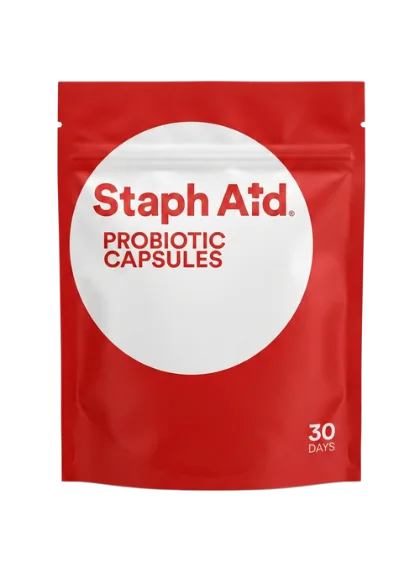
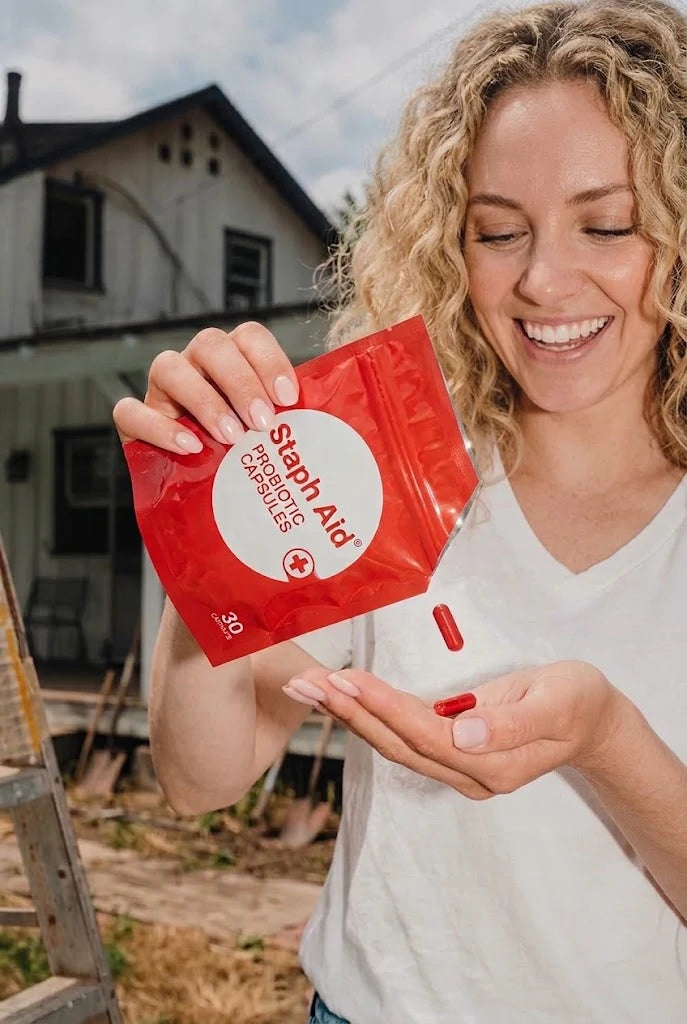
StaphAid is one capsule a day of our proprietary probiotic formula with Vitamin C, formulated to support skin, gut and immune health.* It is not a treatment for any infection.
Learn about StaphAidHow staph gets into the body
Healthy, unbroken skin is a strong barrier. Staph causes infections when it finds a way through it, or through the lining of the nose or mouth.5 Common openings include:
- Cuts, scrapes, blisters and turf burns
- Shaving nicks and irritated hair follicles
- Bug bites and scratched skin
- Cracked skin from eczema5
- Surgical wounds, and medical devices such as catheters or IV lines5
Some people are more likely to get sick once staph gets in. That includes people with diabetes, vascular disease or a weakened immune system, and people who have recently been in the hospital.5 The CDC adds people with cancer, people who inject drugs, and hospital patients in intensive care or with medical devices to the higher-risk list.1
Where staph spreads most easily
Public-health agencies sum up the conditions that help staph and MRSA spread as the “5 Cs”: crowding, frequent skin-to-skin contact, compromised (broken) skin, contaminated items and surfaces, and lack of cleanliness.3
That explains why staph tends to show up in locker rooms, gyms, daycares, dorms, military barracks and busy households. People in contact sports face extra risk because they get scrapes and share gear.2 Staph doesn’t care about age or fitness level. A toddler in daycare, a wrestler on a team and a soldier in shared housing can all be exposed. What they have in common is close contact and shared space. For a full list of habits that help, see how to lower your risk of staph.
Staph from food is different
You can also get sick from staph through food, but it works another way. When someone who carries staph handles food without washing their hands, and the food then sits out, the bacteria can make toxins that cause vomiting and stomach cramps.6 This is food poisoning, not a skin infection, and it usually passes within a day.6 Cooking kills the bacteria but not the toxin they’ve already made, so clean hands before handling food are the key step.6
When to see a doctor
Call a doctor if you notice:
- A bump that is red, swollen, warm, painful or full of pus
- Redness that spreads, or red streaks moving away from a wound
- Fever or chills along with a skin infection
- Any skin infection in someone with diabetes, a weakened immune system, or a recent surgery
Get urgent care or call 911 for a fever with fast-spreading redness, confusion, trouble breathing, or a baby who seems very sick.
Don’t squeeze or drain a bump yourself. A doctor can find out whether it’s staph and choose the right treatment.
- Centers for Disease Control and Prevention. Staphylococcus aureus Basics. https://www.cdc.gov/staphylococcus-aureus/about/index.html
- MedlinePlus, National Library of Medicine. Staphylococcal Infections. https://medlineplus.gov/staphylococcalinfections.html
- Minnesota Department of Health. Questions and Answers about Methicillin-Resistant Staphylococcus aureus (MRSA) in Schools. https://www.health.state.mn.us/diseases/staph/mrsa/mrsaschools.html
- Sakr A, Brégeon F, Mège JL, Rolain JM, Blin O. Staphylococcus aureus nasal colonization: an update on mechanisms, epidemiology, risk factors, and subsequent infections. Frontiers in Microbiology. 2018;9:2419. https://doi.org/10.3389/fmicb.2018.02419
- Cleveland Clinic. Staph Infection: Causes, Symptoms, Diagnosis and Treatment. https://my.clevelandclinic.org/health/diseases/21165-staph-infection-staphylococcus-infection
- Centers for Disease Control and Prevention. About Staph Food Poisoning. https://www.cdc.gov/staph-food-poisoning/about/index.html
This article is for general education and is not medical advice. If you think you have an infection, see a doctor. These statements have not been evaluated by the Food and Drug Administration. This product is not intended to diagnose, treat, cure, or prevent any disease.