
Staph Food Poisoning: Symptoms, Causes and Prevention
Staph food poisoning hits fast and usually passes within a day. Here’s what causes it, which foods are most often involved, and how to keep it out of your kitchen.

- Symptoms like nausea, vomiting, cramps and diarrhea start suddenly, 30 minutes to 8 hours after eating.1
- It usually lasts 24 hours or less, and severe illness is uncommon.1
- Cooking kills staph but not the toxin it already made, so reheating spoiled food won’t make it safe.1
- Wash your hands before handling food, and don’t leave perishable food out for more than 2 hours.2
What staph food poisoning is
Staph food poisoning is caused by toxins, not by an infection. When Staphylococcus aureus gets into food and the food sits at the wrong temperature, the bacteria multiply and release toxins. Eating those toxins makes you sick.1
This is different from a staph skin infection. The illness comes from what the bacteria left behind in the food, which is why it strikes fast and passes fairly quickly. It’s also why the food can seem perfectly fine.
Symptoms and timing
Symptoms usually start suddenly, anywhere from 30 minutes to 8 hours after eating. They include:1
- Nausea
- Vomiting, which can be severe
- Stomach cramps
- Diarrhea
Some people also get a headache or a mild fever.3 Symptoms tend to come on hard and fast, which can be scary, but they usually fade just as quickly. Most people feel better within 24 hours, and severe cases are uncommon.1 Very young children, older adults and people with weakened immune systems are more likely to become seriously ill, and heavy vomiting can lead to dehydration.3
Foods most often involved
The riskiest foods are those that aren’t cooked after people handle them, such as:1
- Sliced deli meats
- Puddings and custards
- Cream-filled pastries
- Sandwiches
These foods get handled a lot during prep and aren’t heated again afterward, which gives staph from hands a chance to settle in. Milk, processed meats and fish have also been linked to outbreaks.3 The tricky part is that tainted food can look and smell normal, so you can’t judge it by a sniff test.3 Cooked foods can cause it too if they sit between 40°F and 140°F for too long, like a tray of ham left on the counter.1 Picnics, potlucks and buffets deserve extra care, since food often sits out for hours.
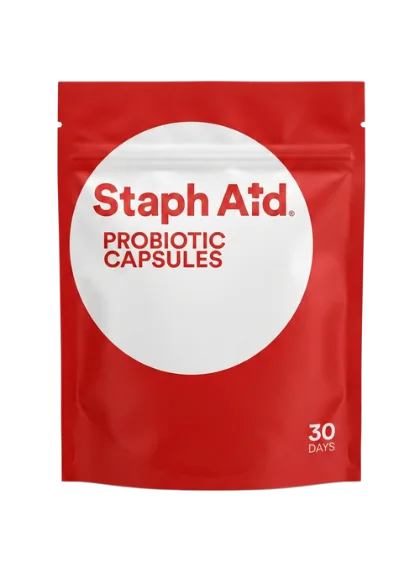
StaphAid is one capsule a day of our proprietary probiotic formula with Vitamin C, formulated to support skin, gut and immune health.* It is not a treatment for any infection.
Learn about StaphAidHow food gets contaminated
It usually starts with hands. The CDC estimates that about 1 in 4 people carry staph, and it gets into food when they handle it without washing their hands first.1 People with skin infections should not prepare food for others.3
Then time and temperature do the rest. Staph multiplies in food kept between 40°F and 140°F.1 Once the toxin forms, cooking or reheating won’t remove it. Heat kills the bacteria, but the toxin stays.1 That’s why smelling food, tasting it, or heating it longer is not a safe test.
How to prevent it
Prevention comes down to two things: clean hands, and keeping food either cold or hot.
- Wash your hands with soap and water before you prepare or serve food.2
- Keep food out of the “danger zone” between 40°F and 140°F.2
- Refrigerate perishable food within 2 hours, or within 1 hour if it’s 90°F or hotter.2
- Keep cold foods at 40°F or below, and hot foods at 140°F or above, at picnics and parties.4
- If you have a cut or sore on your hands, let someone else make the food.3
- Pack lunches with deli meat or cream fillings with an ice pack so they stay at 40°F or below.4
For everyday habits that help beyond the kitchen, see how to lower your risk of staph.
Getting through it
The main job is to replace lost fluids. Sip water or other fluids often, even if you can only keep down a little at a time.5 Small, frequent sips are often easier to keep down than big gulps. Water, clear broth or an oral rehydration drink from the pharmacy are all good choices. Antibiotics don’t help, because they don’t affect the toxin.1 Lab tests on food are usually done only during outbreaks.1 For one person, a doctor can usually tell what’s going on from the symptoms.3 Rest until you feel like yourself again, which for most people is within a day.1
When to see a doctor
Call a doctor if you or someone you care for has:5
- A fever over 102°F
- Bloody diarrhea
- Diarrhea that lasts more than 3 days
- Vomiting so often that liquids won’t stay down
- Signs of dehydration: peeing very little, a dry mouth and throat, or dizziness when standing
Keep sipping fluids while you wait to be seen.5
If the person who is sick is a baby, an older adult, pregnant, or has a weakened immune system, call their doctor early rather than waiting it out.
Get urgent care or call 911 for confusion, fainting, trouble breathing, or a baby who seems very sick or very drowsy.
A good rule for next time: when in doubt about food that sat out too long, throw it out.
- Centers for Disease Control and Prevention. About Staph Food Poisoning. https://www.cdc.gov/staph-food-poisoning/about/index.html
- Centers for Disease Control and Prevention. Preventing Staph Food Poisoning. https://www.cdc.gov/staph-food-poisoning/prevention/index.html
- Merck Manual Consumer Version. Staphylococcal Food Poisoning. https://www.merckmanuals.com/home/digestive-disorders/gastroenteritis/staphylococcal-food-poisoning
- U.S. Food and Drug Administration. Handling Food Safely While Eating Outdoors. https://www.fda.gov/food/buy-store-serve-safe-food/handling-food-safely-while-eating-outdoors
- Centers for Disease Control and Prevention. Symptoms of Food Poisoning. https://www.cdc.gov/food-safety/signs-symptoms/index.html
This article is for general education and is not medical advice. If you think you have an infection, see a doctor. These statements have not been evaluated by the Food and Drug Administration. This product is not intended to diagnose, treat, cure, or prevent any disease.