

Vitamin C and Immune Function: What It Does and Doesn’t Do
Vitamin C helps your immune system work and your wounds heal. It won’t stop most colds or treat infections. Here’s what the evidence says and how much you need.

- Vitamin C helps your immune system work and is needed to make collagen, which wounds need to heal.1
- Most adults need 75 to 90 mg a day, an amount easy to get from fruits and vegetables.1,3
- Taking vitamin C regularly doesn’t prevent colds for most people, though it may shorten them slightly.2
- More isn’t better. Adults shouldn’t go above 2,000 mg a day.1
What vitamin C does
Vitamin C is a nutrient your body needs every day. It helps your immune system work properly, and it’s involved in the activity of white blood cells.1,3 It also:
- Acts as an antioxidant, helping protect cells from damage by free radicals.1
- Helps make collagen, a protein your body needs to heal wounds.1
- Helps you absorb iron from plant foods.1
Vitamin C dissolves in water and isn’t stored well in the body, so you need a steady supply from what you eat.3 Its collagen role is one reason it matters for skin: poor wound healing is one of the signs of a serious shortage.1
How much you need
The recommended daily amounts for adults are:1
- Men: 90 mg
- Women: 75 mg
- During pregnancy: 85 mg
- While breastfeeding: 120 mg
- People who smoke: add 35 mg to the amounts above
Good food sources include citrus fruits, red and green peppers, kiwifruit, broccoli, strawberries, cantaloupe, baked potatoes and tomatoes.1 Here’s how quickly food adds up:2
- Half a cup of raw sweet red pepper: 95 mg
- One medium orange: 70 mg
- One medium kiwifruit: 64 mg
- Half a cup of cooked broccoli: 51 mg
- Half a cup of sliced strawberries: 49 mg
Long storage and cooking lower the vitamin C in food, because it dissolves in water and breaks down with heat. Steaming or microwaving may lose less.2 Most people can reach these amounts through ordinary foods, and extra amounts haven’t been shown to benefit people who are healthy and well nourished.3
What it does and doesn’t do for colds
Vitamin C’s reputation as a cold fighter is bigger than the evidence. A large review of studies using at least 200 mg a day found:2
- For most people, taking it regularly did not lower the chance of catching a cold.
- It modestly shortened colds: by about 8% in adults and 14% in children.
- Starting it after symptoms began didn’t change how long a cold lasted or how bad it felt.
- In people under heavy physical stress, such as marathon runners, skiers and soldiers, it cut the number of colds by about half.
So for most people, a daily dose won’t keep colds away, and a big dose once you’re already sniffling won’t cut the cold short. The small effect on how long colds last showed up in people who were taking vitamin C regularly before they got sick.2
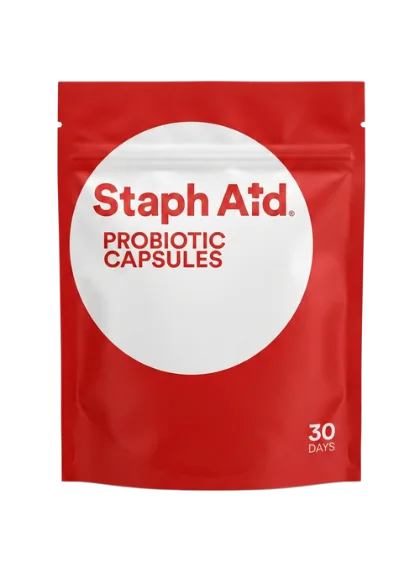
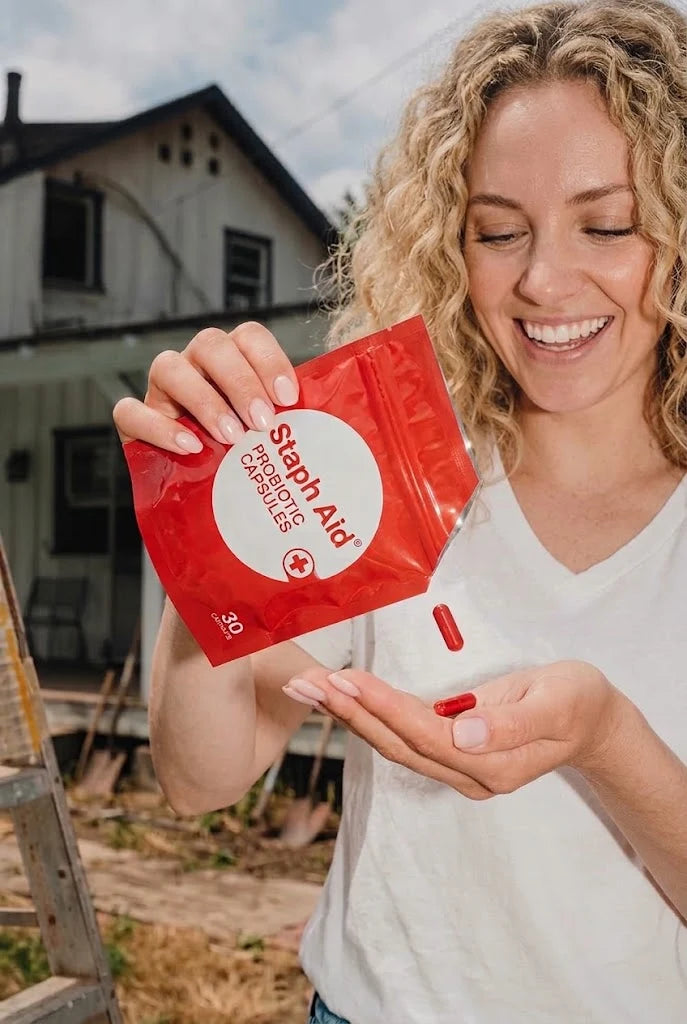
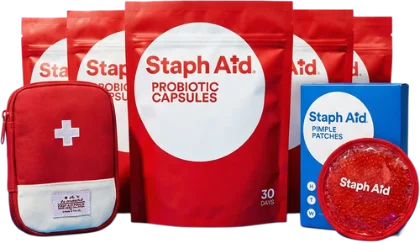
StaphAid is one capsule a day of our proprietary probiotic formula with Vitamin C, formulated to support skin, gut and immune health.* It is not a treatment for any infection.
Learn about StaphAidWhat vitamin C can’t do
Vitamin C is not a treatment for infections, including skin infections like staph or MRSA. If you have signs of an infection, you need a doctor, not a bigger dose. It also doesn’t replace the everyday basics like washing your hands and keeping cuts clean and covered.
More also isn’t better. The upper limit for adults is 2,000 mg a day. Too much can cause diarrhea, nausea and stomach cramps.1 Very high intakes have been linked to kidney stones in people with kidney disease or a history of stones.3 Vitamin C can also interact with some cancer treatments and some cholesterol medicines, so tell your doctor if you take it regularly.1
If you want more vitamin C, start with food. Fruits and vegetables bring fiber and other nutrients along with it, and a varied diet covers most people’s needs.3
Who may run low
Groups more likely to run low include people who smoke, people who eat a very limited range of foods (including some older adults), and people with conditions that keep the gut from absorbing nutrients well.2 People who smoke have lower vitamin C levels than nonsmokers, and they’re advised to get an extra 35 mg a day.1,2
A severe shortage causes scurvy. Signs can appear within about a month of getting very little vitamin C (below about 10 mg a day).2 They include tiredness, swollen gums, small red or purple spots on the skin, joint pain and wounds that heal poorly.1
For other everyday habits that matter, see how to lower your risk of staph and your skin microbiome.
When to see a doctor
A doctor can check whether you’re getting enough and whether extra makes sense for you. Talk with your doctor before taking high amounts of vitamin C if you are pregnant, have kidney problems, are being treated for cancer, or take cholesterol medicine. See a doctor if you notice:
- Swollen gums or small red or purple spots on your skin1
- A cut or sore that isn’t healing
- A skin sore that is red, swollen, warm, painful or full of pus
- Fever with spreading redness around a wound
If you have a fever with fast-spreading redness, confusion or trouble breathing, get urgent care or call 911.
- NIH Office of Dietary Supplements. Vitamin C: Fact Sheet for Consumers. https://ods.od.nih.gov/factsheets/VitaminC-Consumer/
- NIH Office of Dietary Supplements. Vitamin C: Fact Sheet for Health Professionals. https://ods.od.nih.gov/factsheets/VitaminC-HealthProfessional/
- Harvard T.H. Chan School of Public Health, The Nutrition Source. Vitamin C. https://nutritionsource.hsph.harvard.edu/vitamin-c/
This article is for general education and is not medical advice. If you think you have an infection, see a doctor. These statements have not been evaluated by the Food and Drug Administration. This product is not intended to diagnose, treat, cure, or prevent any disease.